How Much Sub-Base Do I Need for My Project?
Ever stood in your driveway with a tape measure, wondering if you're about to order way too much material or nowhere near enough? If the first question that comes to mind is “how much sub-base do I need?”, then hopefully this blog will have you covered.
We're going to answer that question with a simple, reliable formula that takes the uncertainty out of ordering. And you can trust that we know what we’re talking about. At MB Wilkes, we've been supplying sub-base materials across the UK for over 60 years, offering both delivery and quarry collection so you can get exactly what you need, when you need it.
Understanding Sub-Base and Its Uses
Sub-base is the unsung hero of any solid construction project. It's the compacted foundation layer that sits beneath your finished surface, distributing weight evenly and preventing your driveway, patio, or pathway from cracking, sinking, or shifting over time.
Skipping the use of sub-base materials can lead even the most beautifully laid paving to eventually fail. We recommend it for driveways, patios, garden paths, shed bases, and any foundation work where long-term stability matters, making it an essential first step in groundwork that simply can't be skipped.
Common Types of Sub-Base Material
When you're choosing between sub-base aggregates, the two main options you'll encounter are MOT Type 1 and MOT Type 3, each designed for different applications depending on the load requirements of your project.
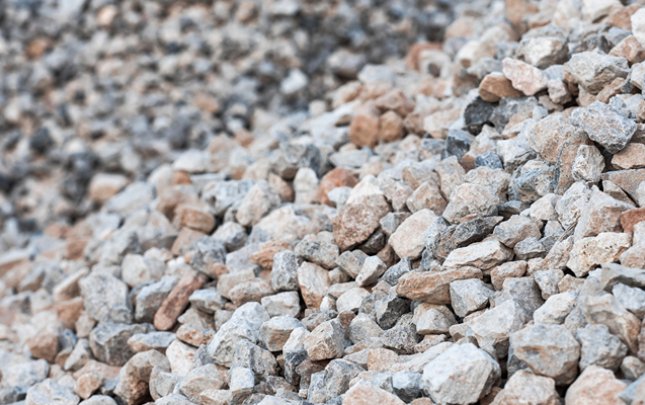
MOT Type 1 consists of crushed concrete or limestone, like our Type 1 Mendip, that's been carefully graded to create a dense, stable base when compacted. It's the workhorse of sub-base materials, ideal for driveways, heavy-duty patios, and any area that'll bear significant weight from vehicles or foot traffic. The angular particles lock together beautifully under compaction, creating a solid foundation that won't shift.
MOT Type 3 (often called scalpings), such as Type 3 Limestone, is a finer material made up of smaller crushed stone and dust. While it still provides excellent compaction, it's typically used for lighter applications like footpaths, shed bases, or as a blinding layer over MOT Type 1. It's also brilliant for filling gaps and levelling surfaces before your final paving goes down.
How Much Sub-Base Do You Need – The Simple Formula
So, onto the question of “how much sub-base do I need for type 1?” The sub-base calculation couldn't be more straightforward.
- Take your area in square metres
- Multiply by your depth in millimetres divided by 1,000
- Multiply that result by 2.2 to get the tonnes you'll need
Equation: Area (m²) × Depth (mm ÷ 1,000) × 2.2 = Tonnes
That 2.2 figure represents the density of compacted sub-base, converting your volume into actual weight for ordering purposes.
Bear in mind that materials typically compress by 25–30% when a plate compactor is used. It is standard industry practice to add 5–10% extra to the final tonnage to account for uneven subgrades or spillage during the work.
Alternatively, you might be asking “how much sub-base do I need for type 3?”. In short, the calculation remains the same, you simply adjust the density from 2.2 down to 1-8 – 2.
Step-by-Step Calculation Example
Let's work through how much sub-base you’ll need for a typical driveway measuring 20m² at 100mm depth.
First, we calculate 20 × (100 ÷ 1,000) × 2.2, which gives us 20 × 0.1 × 2.2. That works out to 4.4 tonnes. Since our bulk bags typically hold around 850kg each, you'd need approximately seven bags to cover this area comfortably, allowing for a bit of overage during compaction and levelling and some wastage.
Recommended Depths for Different Projects
Understanding how much sub-base you need depends entirely on what you're building and the load it'll carry. Different applications require different foundation depths to perform properly over time.
- Driveways and Vehicle Access: Aim for a driveway sub-base depth of 150-200mm to support the weight of cars and regular traffic without settling or rutting.
- Patios and Footpaths: A patio sub-base depth of 75-100mm provides sufficient support for pedestrian use whilst keeping material costs reasonable.
- Shed Bases: Between 75-100mm works well for garden buildings and lighter structures that won't experience heavy loading.
- Heavy-Duty Applications: For commercial drives or areas with frequent heavy vehicle access, go for 200mm or more to ensure long-term durability.
Ordering Your Sub-Base from MB Wilkes
If you’re asking yourself, “how much sub-base do I need?” and you’re still unsure, we’ll be happy to advise you. Either way, ordering from us couldn't be easier. We offer bulk bag (850kg) deliveries for smaller residential projects like patios and paths, which are perfect when you need precise quantities and easy handling.
For larger builds such as driveways or extensive groundwork, loose loads delivered by the tonne offer better value and faster coverage, letting you tackle substantial areas without constantly restocking materials.
Our Sub-Base Material Options
We stock a comprehensive range of sub-base materials to suit every application. Our MOT Type 1 limestone and crushed concrete options provide that rock-solid foundation for driveways and high-traffic areas, compacting down beautifully to create a level, stable base.
For lighter projects, our MOT Type 3 scalpings offer excellent value while still delivering the compaction you need for paths and shed bases. Each material is quality-checked and ready to perform exactly as it should, giving you confidence in your groundwork from the very first layer.
Delivery and Collection
We deliver across our coverage area with flexible scheduling to match your project timeline. Minimum order quantities apply for delivery, so do give us a ring to discuss your specific requirements. If you're a trade customer or need materials immediately, you're welcome to collect directly from our quarry using our weighbridge service, which means you can load up and get straight back to site without waiting for delivery slots.
Tips for Ordering the Right Amount
Even with an accurate calculation, there are a few practical considerations that'll help you order the perfect quantity of sub-base aggregates for your project without ending up short or with too much leftover:
- Add 5-10% Extra: Compaction always uses more material than you'd expect, and uneven ground or small wastage during installation means a buffer ensures you won't run out mid-project.
- Round Up to Full Bags: If your driveway sub-base depth calculation gives you 4.4 tonnes, order five bags rather than four to account for variations in coverage.
- Consider Access: Tighter spots or areas with awkward levels might require more material for proper compaction, so factor in your site conditions.
- Account for Edging: Your patio sub-base depth extends slightly beyond the finished surface, so measure generously rather than cutting it fine.
Get Your Sub-Base Delivered Today
Now you've got the formula and know exactly what you need, it's time to get your project moving. Calculate your requirements, then give us a call on 01258 857465 or fill in our contact form to place your order.
As one of the UK's leading suppliers with over 60 years of family-owned expertise, we deliver quality sub-base materials at competitive prices straight to your site. Order today and let's get your groundwork sorted.